



Freelancing in events is always a hot topic. As time goes on, more freelancers seem to be defending their working model all over social media, and in a way, they are combating assumptions people have about them and what freelancing actually entails as companies expect more and more of them.
I’ve seen a lot of LinkedIn posts, aimed both at companies and potential freelancers:
- explaining the pros and cons
- justifying rates
- breaking down lack of benefits, expenses, overhead, even a team
- justifying that they do work (maybe people assume they have it easier?)
And this is all fine and useful…but it’s also incomplete. When people ask for freelance advice, what they usually get back are experiences without context. We could and should be way more nuanced and honest here. Because the conversation we are having right now is still surface level. (Also, to be clear, I’m speaking to people already working in events. If you’re trying to break into the industry, freelancing can be an incredible entry point. This is about people already inside the industry, trying to decide whether freelance is the right next move for them.)
And the person curious about going freelance is left trying to make a decision based on all of it without really knowing:
- Do they have a partner with stable income that covers the shortfall in a quiet month?
- Do they have childcare support?
- Do they have savings or a financial buffer they’re not mentioning?
- Are they freelancing by choice or because it was the only viable option at the time?
- Do they have a side income supporting everything?
- Do they even really need to freelance and work?
Because those things matter more than almost anything else. Some freelancers chose it from a position of strength and have a strong network, savings, and years of experience behind them. Some moved into it reactively after redundancy, burnout, or because their situation became unworkable. Some had safety nets: family support, dual incomes, financial buffers, etc. Some didn’t. For some, it was quite literally the only viable option available at the time (my story on the latter coming up).
Two freelancers can have completely different experiences, not because one is doing it “better,” but because their circumstances are entirely different, and you don’t see that part. Without context, it’s easy to compare.
And yet, a lot of advice and opinions get flattened into: “Here are the pros and cons” or even “You should just go for it.”
But freelance isn’t a personality trait, a mindset, or a universal next step. It’s a working model absolutely influenced by circumstance and context. If you remove the context of how someone got there and how they work in it, you end up taking advice that was never designed for your situation.
The part people don’t say: how I actually became a freelancer
Right now, I’m sitting on several really honest blog posts, inspired by my very early manuscript of the book I’m writing about event careers. They are really vulnerable in a professional setting. I’m starting with this one to give context because becoming a freelancer was not something I wanted to do at the time.
Am I happy that I freelance now? Yes, it fits my life as an expat who needs to be able to travel to my home country, and I might not even live in the UK now if I hadn’t been a freelancer at a certain point in my life. I might not have ever decided to try freelance in the first place because I wanted to be on a corporate ladder. I also love the variety it gives me and the ability to have a portfolio career.
Nevertheless, I feel like I was somewhat forced into freelance due to circumstances many years ago. So, I am thankful, yes, and I believe that everything happens for a reason, but in my experience, there has been a lot of hardship from freelancing which I wasn’t ready for. So the answer isn’t simply to give you the pros and cons here.
My advice is to ask deeper questions of people giving advice. Understand their background, what makes them tick, what they truly struggle with (not the common late payments and whatnot), and what circumstances led them there. Informed decision? A place of empowerment and confidence? What did they wish they had done differently or known?
Freelance was my only option
I want to be honest about my own origin story because I think it’s more common than people admit.
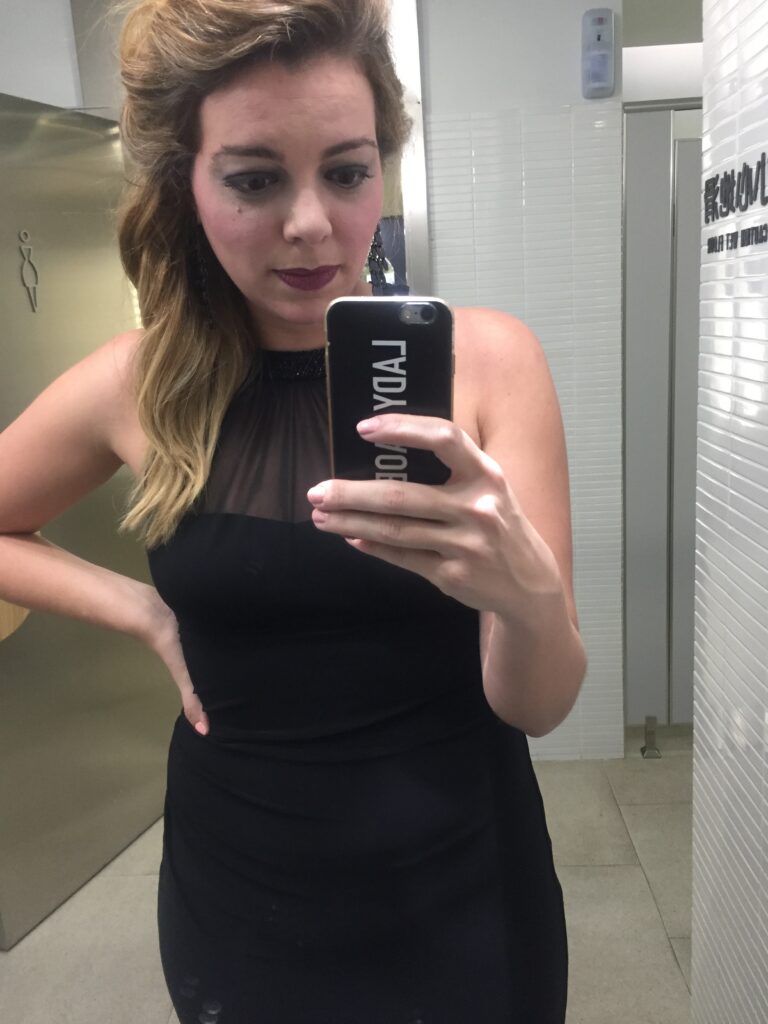
I didn’t choose freelance from a position of strength. It was not an informed decision, nor did I feel empowered. Maybe on the surface I did, as it was during the lady boss era. I was working full time at an event agency in Shanghai…one of the most expensive, fast-moving cities in the world, with huge demand for event pros. About ten months in, I lost my job. Like many businesses in their early years, finances can be volatile. That happens and is normal.
The problem was that I was in a foreign country on a work visa tied to my employment. And I didn’t want to leave yet because I had been there six years and genuinely loved it. I tried to find another full-time role, but I didn’t have the network yet or even the knowledge of events to outpace local talent. Ten months of experience in events wasn’t enough to open many doors quickly especially considering I had been in a completely different industry prior to events. So I started freelancing in the meantime, interviewing when I could, hoping freelance gigs would turn into full-time, and I was also doing things beyond events to make ends meet, and figuring it out as I went, trying to secure visa sponsorship before mine ran out.
Eventually, people around me started saying “You should start your own company so you can freelance and stay.” And that’s where an entirely different layer opens up because not everyone will ever establish a company as a freelancer, but I will mention it here because many do, many staying solopreneurs and others hiring people along the way.
I genuinely like telling people my entire freelance story and about the business. The administrative reality of starting and running a company (even though it was just me) in a foreign country was scary. I was around thirty, hoping I would build it and the people who encouraged me to do it would show up and support. I was not a natural ‘salesperson’. I am not inclined towards admin, accounting, legal systems (this is putting it mildly…).
But, I registered it anyways. Part of the appeal was really practical: after failing to find a job, it was one way I could stay in China, a place I had built a real life and wasn’t ready to leave. So I registered a business without fully understanding what that meant (not as simple as opening an LLC or Limited Company in the US or UK) or the consequences, including:
- the costs
- the legal fine print
- something called Registered Capital that I committed to
- how impossible it would be to CLOSE the company (forever having to pay monthly fees unless I sold it to someone else…)
Wild fact: when I left China, I was still paying mandatory monthly company fees and potentially would be forever. When I finally found someone I didn’t know via WeChat to buy my company years later and cover the scary amount of registered capital and get my name off the books in a country I no longer lived in, I had to mail my passport back to China to a stranger who was my proxy. It was mid-pandemic here and there, and I was worried I wouldn’t get my passport back. The consequences would have been getting a new one at home and dealing with the six or more month delay while I was trying to move from the US to the UK on a family visa and have a wedding. I got it back, thank you to the random person I will probably never meet for doing that for me.
Now, this extreme example likely will not happen to you. But might you open a company as a freelancer? Yes. I did that when I was in America freelancing as well, and that was easier but with caveats of course. Again, you have to do your research and make informed decisions, especially if you want to grow beyond a business-of-one and have employees one day.
This points out a really important thing though: freelance decisions get made in moments where you don’t have full visibility.
Sometimes I wasn’t honest with how freelance was going
There’s another part of this that I didn’t understand at the time, and I think a lot of people will recognise this. After I had been freelancing for a while, I wasn’t always honest about how it was actually going.
If people asked, I would say it was good. I was going to events. I was working. From the outside, it looked like it was working, but internally, there were moments where I felt completely miserable.
I remember going to those “girl boss,” founder, CEO type meetups (the kind that are meant to feel empowering) and sitting there thinking:
I hate this.
I just didn’t actually feel like I had chosen that identity. I had ended up in it.
At the same time, I would find myself getting frustrated in my freelance work. I wanted to be included in certain conversations, part of the team and developed. It took me awhile to realize that this was the reality of the model I was in.
I was not an employee. I was a freelancer in a different structure. Once I understood that, I had to shift my approach. If I wanted inclusion, development, continuity, and deeper relationships, I had to build that intentionally through:
- repeat clients
- longer term collaborations
- being more strategic about who I worked with
- creating my own version of stability inside a flexible model
But that took time, and I think a lot of the frustration people feel in freelance comes from expecting it to behave like employment when it simply just doesn’t.
Was it the right decision?
This is where it gets nuanced. Taking the registered company aspect out of it, which still kind of scars me, I’m glad freelancing worked out. I had flexibility that ended up being exactly what I needed when family emergencies and deaths arose twice within six months and when I was trying to maintain a long distance relationship while being halfway around the world. Freelance gave me options that employment couldn’t, but I didn’t choose it. I ended up there, and then I built something from it, including a portfolio career.
And I can hold two truths at once. I’m grateful for what it gave me but recognize the hardship it created at times.
I tell that story because there are a lot of people who move into freelance reactively. They are made redundant, burnt out or their full time situation became unsustainable or untenable, all valid reasons to leave employment, change employers, or take a sabbatical. BUT they’re not the same as choosing independence from a strong, deliberate position, and I think a more useful conversation starts with acknowledging that difference.
There’s a difference between choosing freelance and ending up there. Both are valid but not the same starting point.
Freelance advice right now is surface level
So what’s the point of this? There’s a conversation that happens loads in the events industry, and it almost always goes the same way. Someone with a few years of experience starts thinking about going freelance and asks around for advice and stories. They get a mixture of:
- encouragement
- horror stories (being ghosted, late payments, scope creep, burnout)
- aspirational content (fully booked, great clients, flexibility…and remember, everyone goes on vacation and you can do that, too, even when you are employed)
- skills gained
And then they make a decision based on a version of freelance that doesn’t fully exist in the way it’s presented.
The question shouldn’t be: How do I go freelance?
It’s: Should I?
And not in a generic pros and cons way, but in a more personal and honest way. Genuinely….
- Does this model fit who I am?
- Does it fit what I need right now?
- Do I have, or am I willing to build, the skills required to sustain it?
- Am I prepared to operate without a safety net?
- What will this take from me mentally and emotionally and can my nervous system handle it?
- (There are deeper identity questions at the bottom of this post)
That’s the conversation I want to keep having because anyone can give advice how to become a freelancer, systems to use, apps to get, templates and more.
Freelance is a different operating system
To be clear, freelance is not the next step. It is not a way to promote yourself to business owner. Somewhere along the way, some people in the events industry decided that going freelance is what you do when you’ve proven yourself. I’ve seen people treat employment like a training ground. Does it train you? Absolutely. But we can’t stop there because there are many benefits, and in some ways, employment is harder.
Independence can be seen as the promotion, granted by the person going solo and their circle. I’ve heard people say things like “you’re too experienced to work for someone else”; “you should definitely be doing your own thing”...and what’s implied in that is that full-time employment is somehow a lesser choice and true ambition looks like going out on your own. It doesn’t.
Freelance is not more senior, more strategic, or more successful than employment. It’s a different operating system with a different set of trade offs, and for some people it’s genuinely the right fit, and for others it’s destabilizing. Sometimes it’s both, depending on the season of life you’re in.
The wider creative and service industries glamorize the leap from employment to freelance without showing the things that make it possible. You see someone posting about an impressive event, an impressive client, and being fully booked. You don’t see the quiet January, the cancelled contracts, the invoices that didn’t get paid, the months where the pipeline was thin and genuinely concerning. And that is the bare minimum. Stay tuned for more on that…
That gap between the idea of freelance and the reality of it is something most people only discover after they’ve made the jump.
What freelance actually gives you
There’s a development conversation here that people don’t like to have. Freelance absolutely builds certain skills quickly. You:
- build range faster than you would in one comapny
- work across different businesses, sectors, budgets, event formats, and teams
- develop commercial awareness and business savviness which a manager would normally abosrb
- develop accountability to yourself
- gain certain skills that might take you longer otherwise
- learn how to operate without a safety net
But it’s nice when something goes wrong in employment because there is usually a shield in front of you. In freelance, there’s no manager to buffer it. Your name is on the outcome.
There are other things that freelance does not give you as easily, and that’s usually because you don’t have someone invested in your day to day development in the same way. In employment:
- someone is responsible for your growth
- someone gives you feedback consistently
- someone advocates for you internally
- someone buffers difficult situations
- someone exposes you to decision-making environments over time
In freelance, you have to create all of that yourself. Most people don’t because they don’t realize what’s missing until later. There is a depth that comes from being inside an organization over time, seeing how decisions are made, understanding power dynamics, and watching how strategy evolves. That kind of development is harder to replicate when you’re moving from project to project.
There are people who genuinely thrive in that structure, who want one team instead of constantly context-switching, depth over variety, to take a proper holiday without a background hum of anxiety about what they’re missing. It is very good self-awareness, in my opinion, when people choose employment for this reason.
Acknowledging that doesn’t make freelance worse, just different.
It’s not that easy at first
The autonomy, flexibility, and freedom that people associate with freelance usually doesn’t exist in the early stages. Early freelance looks a lot like responding to whatever comes in and saying yes to things you might not choose if you had options. The freedom comes later once you’ve built the client relationships and the repeat work that lets you start being more selective. That foundation takes time, and a lot of people go into freelance without it.
There’s also something else that doesn’t get talked about enough and that is the way freelance demands things of your nervous system. You’re almost constantly scanning for what’s next and managing delivery and business development at the same time. There’s a background noise that doesn’t really switch off the way it does in employment.
I’m on my phone all the time. To talk to friends and family, yes, but I am constantly on LinkedIn looking for partners, clients, jobs, or getting ideas somewhere. A spur of the moment idea to improve my website or Instagram or a new social media post idea. If you’re someone who needs to fully switch off to function well, that’s worth taking seriously.
On the financial side: you’re paying for your own training, your own software, your own travel, your own office which is why day rates and employed salaries are not comparable figures. You can’t compare apples to oranges when a freelancer’s rate has to take the risk and overhead that an employer would carry for you.
The assumptions people make about you
One thing I’ve encountered repeatedly and never included in my advice until it affected me is that people will make assumptions about you and act on them without checking. They’ll assume your availability or that your rates haven’t changed. They’ll build plans and budgets around you without confirming and then send a contract based on an old rate. They’ll hear that you’ve been delivering events directly for clients and decide you’ve “got your own thing going on” and stop putting you forward for work you’d actually want (something I’ll write about more in another post because this has happened to me countless times).
None of it is malicious; it’s just that people fill in the gaps with the last version of you they encountered, and then they act on it. You have to manage that even when it makes you feel like you’re pushing back or being aggressive or asking too much. You have to keep your professional identity current and tell people what you’re actually available for and what you want. If your rates have changed, communicate it. If your focus has shifted, say so. Nobody is managing your career but you, and silence gets filled incorrectly almost every time.
So should you go freelance?
The honest answer is: it depends on what you actually need right now. Do not do what looks good, what people imply is the next move or should be your next move, and not what you see other people doing.
The obvious questions to ask yourself:
- Do I have the network to sustain this, or am I hoping it will appear once I go freelance?
- Do I have a financial buffer, or am I underestimating how inconsistent income will feel?
- Do I want variety, or do I just want to escape where I am now?
- Do I want autonomy, or do I just want relief?
The harder questions:
- Am I choosing freelance because it fits me or because I’ve outgrown my current environment and don’t realize there are better employed roles?
- Do I actually want to run a business of one or do I just want to do better work? Because those are not the same thing.
- When work slows down, will I become proactive or anxious and avoidant?
- Do I need external structure to perform at my best, or can I create it for myself consistently?
The identity questions:
- Do I associate freelance with success? Why?
- Do I think being employed means “I’m not there yet”?
- Am I trying to prove something by going freelance. If yes, to whom?
- If no one could see my career, would I still make the same decision?
The timing questions:
- Is this the right model or just the wrong timing?
- Would one more year in the right full time role give me skills, confidence, and relationships that make freelance easier later?
- Am I building on something or escaping something?
The reality check:
- If this doesn’t go well in the first year, do I have a plan or just optimistic vibes?
- Am I willing to be a beginner again in a completely different way?
- What am I not thinking about because it’s inconvenient to consider right now?
If you’re early in your career, freelance can build range fast, but it can also destabilize you if there’s no foundation yet. I genuinely wish I hadn’t become a freelancer so early in my full-time events career. There was a lot I could have learned with more time inside a company first. I have an entire blog coming up on this point, so stay tuned.
If you’re mid-career, freelance can expand you significantly if your relationships in the industry are strong enough to support it.
If you’re burnt out, freelance can feel like an escape, but it doesn’t remove pressure. It changes the pressure so you have to decide if that kind of pressure is okay with you. You’re wearing more hats.
And if you’re established, freelance becomes more strategic. You have more choice, more optionality, more ability to design what your work actually looks like.
The last thing
Careers in events are not linear. I’ve said this before and I’ll keep saying it. You can move between employment, freelance, and hybrid models. Sometimes deliberately, and sometimes life just forces it. Going back to employment after freelancing is not failure. Wanting a stable income for a period of your life — to buy a house, to support a family member, to simply breathe — is not settling.
Most people don’t struggle with freelance because it’s the wrong choice. They struggle because they made the decision based on:
- incomplete information
- someone else’s version of success
- it being the last resort
- a moment they were trying to escape
….instead of a position they were building on.
The goal isn’t to pick the right model forever. It’s to know which one works for you right now, and to choose it with your eyes open.
If this interested you, stay tuned for my next blog related to early career development, freelance, and professional development debt. And you can listen to my most recent podcast on this here.
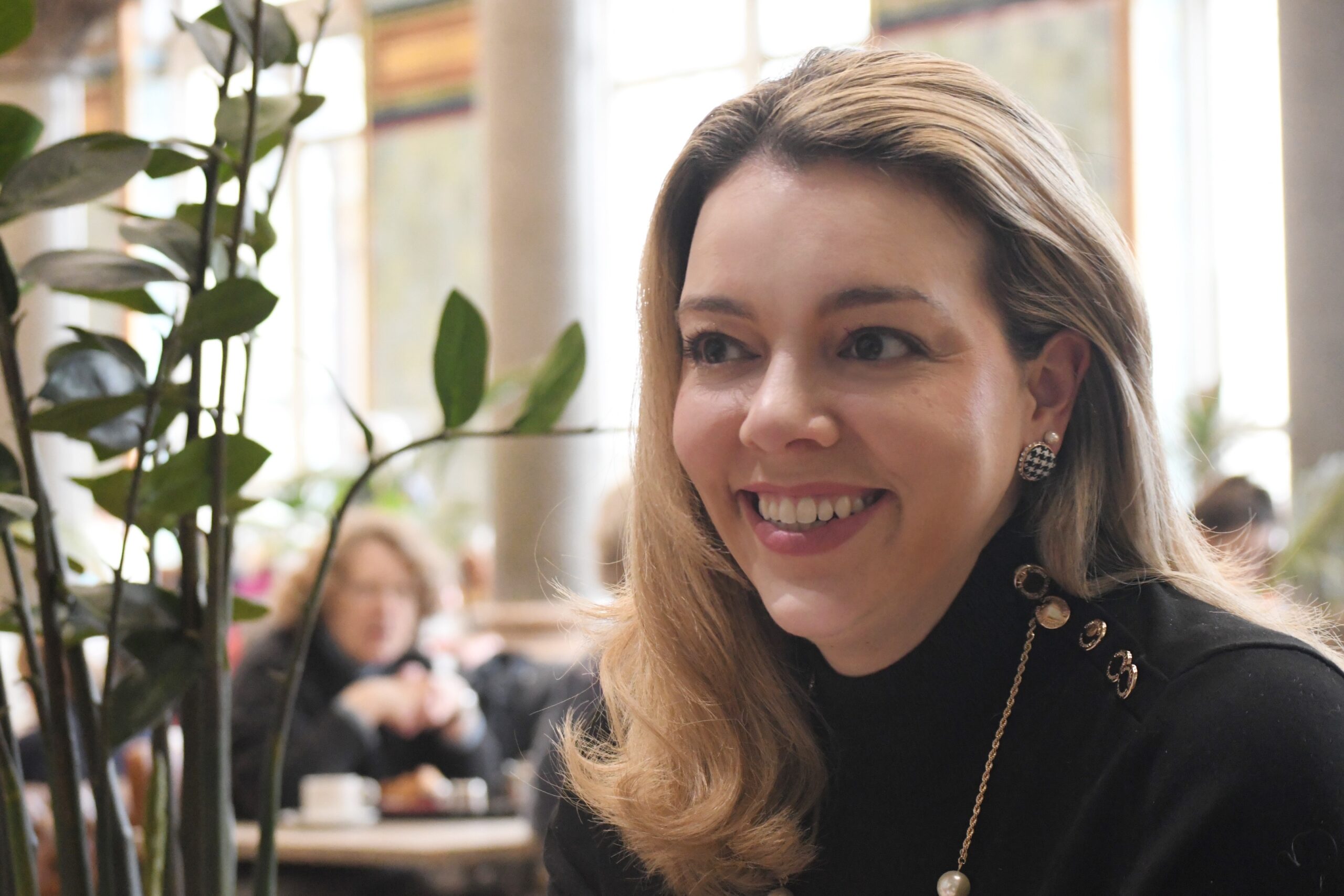
Laura Yarbrough-Lloyd is an event freelancer and career strategist for event professionals. As the founder of IconicEvents®, she is an industry voice on event careers, talent development, and the future of the events workforce. She works with event professionals and organizations across sectors to help build sustainable, ambitious careers within the world’s most iconic events. Her writing explores career progression, industry structures, and the realities of long-term success in events.
