

Want to work at the Olympics? Every Olympic cycle, people watch and think, “I’d love to be part of that.”
Then, a year before the next Games, they start searching: jobs, organising committees, Olympic-branded roles. And often… nothing.
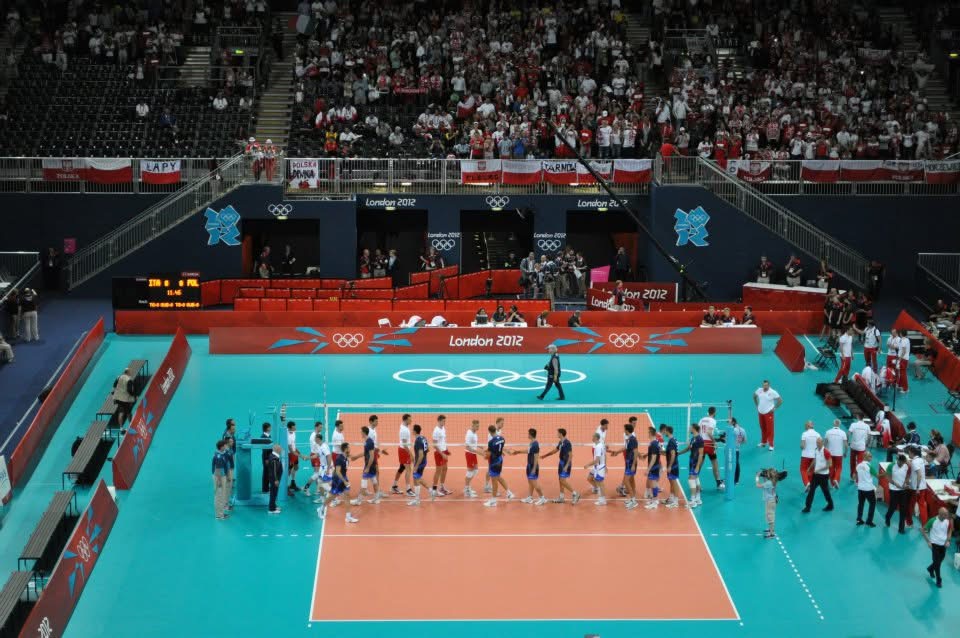
I first stepped into this world during London 2012. Being on the ground, I quickly realised something most people don’t see from the outside: it isn’t just one employer under an Olympic logo.
It’s layers and overlaps. There are different organisations moving at different speeds, people who work one Games and move to the next sponsors planning years ahead, and federations operating year-round.
After staying connected to that world ever since 2012, here’s what I’ve learned:
If you want to work at the Olympics, you can’t approach it like a single job search. You need to understand how it actually works.
Let’s break that down.
1. There Isn’t Just One Way In to The Olympics
When you say you want to work at the Olympics, you may think of working with the International Olympic Committee or something else Olympic branded.
That’s one path, but it’s not the only one. Most opportunities at the Olympics aren’t Olympic branded.
You could work at the Games through:
- The host city Organising Committee
- An international sport federation
- A national governing body
- A national Olympic committee
- A commercial partner or sponsor
Each route hires differently, and each opens roles at different times. They even value different experience. So if you only know to look in one place, you narrow your odds dramatically.
2. Timing Matters More Than Passion
Olympic hiring is cyclical:
- Organising Committees scale 2–4 years before the Games
- Delegation roles open closer to Games time
- Federations hire year-round
- Sponsors begin activation planning years in advance
If you wait until you see social media buzz about tickets and ceremonies, you might be late. The people who work multiple Games plan early.
What this looks like in practice:
- While one Games is delivering, the next is already hiring.
- While Organising Committees are scaling, federations are planning qualification systems.
- While sponsor campaigns look spontaneous, activation strategy often starts years earlier.
The Olympics world is always moving. If you understand that rhythm, you don’t feel late or like you missed opportunities. You are always positioning yourself for the next wave.
A Realistic Timeline Example – Let’s take a typical Summer Games Cycle:
- 4–6 years out: Host city strategy, leadership hires, sponsor agreements, venue master planning
- 3–4 years out: Organising Committees begin scaling operational teams
- 2–3 years out: Test events, sport planning, supplier contracts ramp up
- 12–18 months out: Delegation logistics, accreditation planning, hospitality teams expand
- Games year: Short term delivery roles peak
- Immediately after: Core staff wind down, but many transition into the next cycle elsewhere
And this isn’t happening in isolation. While one city is delivering, the next host city is already recruiting, sponsors are locking in activation strategies, etc. There isn’t one moment to break in because everything is overlapping.
If you understand which wave fits your current experience, goals, lifestyle and more, you move strategically instead of reacting emotionally to job boards.
3. Work Backwards From What You Already Do
Instead of only asking, “How do I break into the Olympics?”
Go a step further and ask yourself “Where does my current skill set naturally fit?”
For example:
- Operations → Host city delivery
- Sports administration → Federations or national bodies
- Marketing → Sponsor activation
- Client services → Hospitality
- Media → Delegation communications
The strongest Olympic careers are built by positioning existing expertise, not starting from scratch.
4. Exposure vs. Sustainability
Be honest about what you want. Do you want:
- A high intensity short term Games contract?
- A long term career in international sport?
- Commercial brand exposure?
- Direct athlete environment experience?
Different pathways lead to very different lifestyles. Many people chase visibility without thinking about sustainability. But doing so will help your search a lot.
There are different types of Olympic careers. Some people:
- Do one Games and leverage it to level up elsewhere
- Move Games to Games across host cities
- Build permanent careers inside federations
- Work commercially across multiple Olympic cycles
Be clear about which one you’re aiming for. The strategy changes depending on that decision.
5. Don’t Leave It to Chance
If you’re serious about working at the Olympics, you need:
- A clear pathway
- A timeline
- A tracking system
- A positioning strategy
Without that, you’re guessing, and Olympic careers are too competitive to guess your way through.
Start earlier than everyone else. It makes all the difference.
If you want a breakdown of the routes and timelines, I’ve mapped it out in detail here: https://iconicevents.thrivecart.com/work-at-the-olympics/
6. Three Things to Do Now If You Want to Work at the Olympics
1. Map out the Olympics routes
Instead of just searching “Olympic jobs,” ask:
- What sport bodies exist in my country?
- What major events feed into the Olympics?
- Which agencies activate Olympic sponsors?
- What suppliers repeatedly work on the Games?
The Olympics is a network more than an employer, so mapping it out is really helpful to know where to put your effort.
2. Start tracking people, not just jobs
Research on LinkedIn:
- Who worked at the last Games?
- What was their job before that?
- Where are they now?
Reverse engineer the patterns. Reach out to them!
3. Strengthen adjacent experience
While you look for Olympics jobs, start building credibility in these areas:
- Event management
- Sport knowledge or experience
- Sponsor activations
- International travel or languages
- Major event operations
- Broadcast or media production
Still Have Questions?
When do Olympics jobs open?
It depends on the route:
- Host city roles: usually 2–4 years before the Games and up to 7 years!
- Delegation roles: 6–18 months before
- Federations & NGBs: year-round
- Volunteers: 6-12 months in advance
- Sponsors: 1-2 years in advance
If you are searching in the year of the Games, most strategic hiring has already happened.
Do Olympics jobs pay well?
Pay varies widely depending on what you do:
- Organising committee roles are often market rate, fixed term contracts
- Federation roles follow typical non-profit or governing body structures’ pay
- Commercial sponsor roles may align with corporate salary bands
- Some roles are unpaid but offer a stipend
Some roles are high paying, but it is not automatically high paying, and many roles are contract or volunteer based.
Do you need sport experience to work at the Olympics?
No, you don’t! Olympics hires from a broad skillset and backgrounds. Things that could help, though, include:
- Major event experience
- Project management
- Broadcast experience
- Marketing or partnerships expertise
- Language skills
- Previous travel or international experience
- The right to work where you are applying
- And yes, sports experience is a plus
But many governance and sport specific roles typically require sport or event experience.
Is volunteering the best way in to the Olympics?
Volunteering is a great way in to the Olympics, but not the only one. Volunteering can provide exposure and is useful for:
- Early career professionals
- Understanding Games operations
- Building entry level networks
What Next?
1. Download the Free Guide: Where to Look for Olympics Jobs & When
If you want a breakdown of the routes and timelines, I’ve mapped it out in detail here: https://iconicevents.thrivecart.com/work-at-the-olympics/
2. Download The Olympics Career Playbook
If you want a deeper dive, get the Olympics career playbook for event professionals and ambitious newcomers: https://iconicevents.thrivecart.com/work-at-the-olympics-guide/
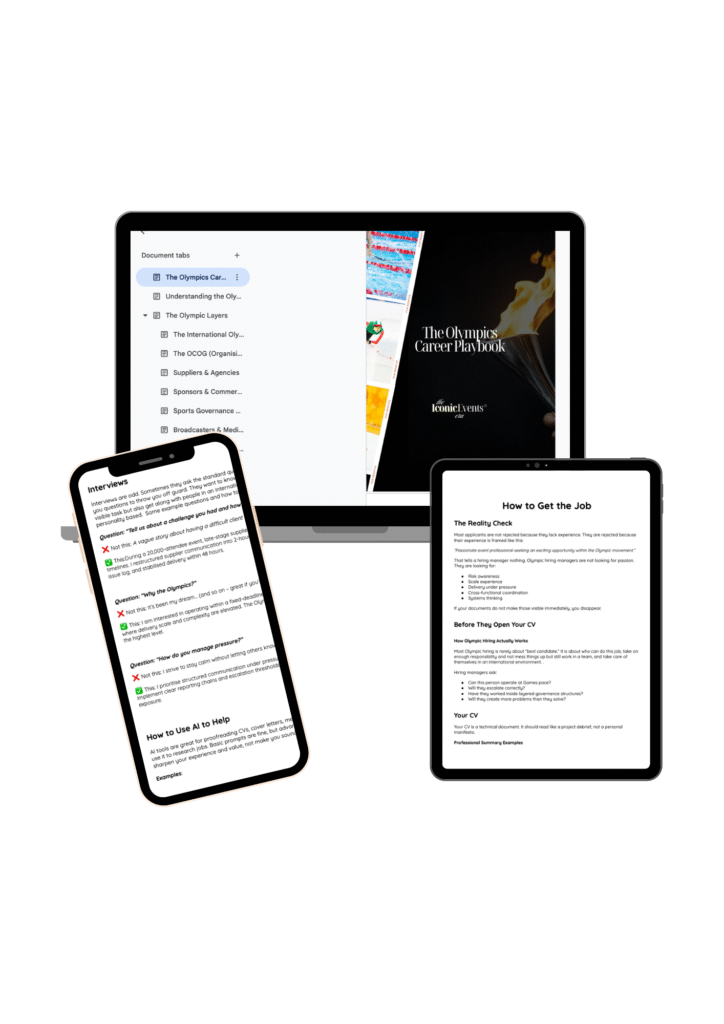
Inside, you’ll get:
- How the Olympics world actually operates, beyond what appears on job boards
- My structured weekly Olympic research routine (built around Games cycles, not random searching)
- Strategic AI prompts to uncover suppliers, hiring signals, and organisational patterns
- Application timing guidance: who hires early vs who scales later
- Common Olympic application mistakes and how to avoid misalignment
- Networking research strategies using LinkedIn to identify past Games professionals and start smart conversations
- Post-Games leverage routes: how to use one Games to level up (or build a multi-Games pathway)
- Industry insight into how hiring momentum really builds inside the Olympic environment

