

At the start of a new year, it’s tempting to only look forward. I have vision boards, lists, etc. just like most people. But I’m throwing it back to November for a moment, because last year I intentionally worked on something that has quietly shaped how I think about events, careers, and strategy.
It’s a concept I call Iconic Immersion.
Last April, I gave a masterclass on how to work in global events, and I first spoke about this activity I was unknowingly doing for years, ever curious, and it was helping shape my event career.
The idea is simple but powerful. Don’t wait to be hired to start learning a world. Build fluency before permission arrives.
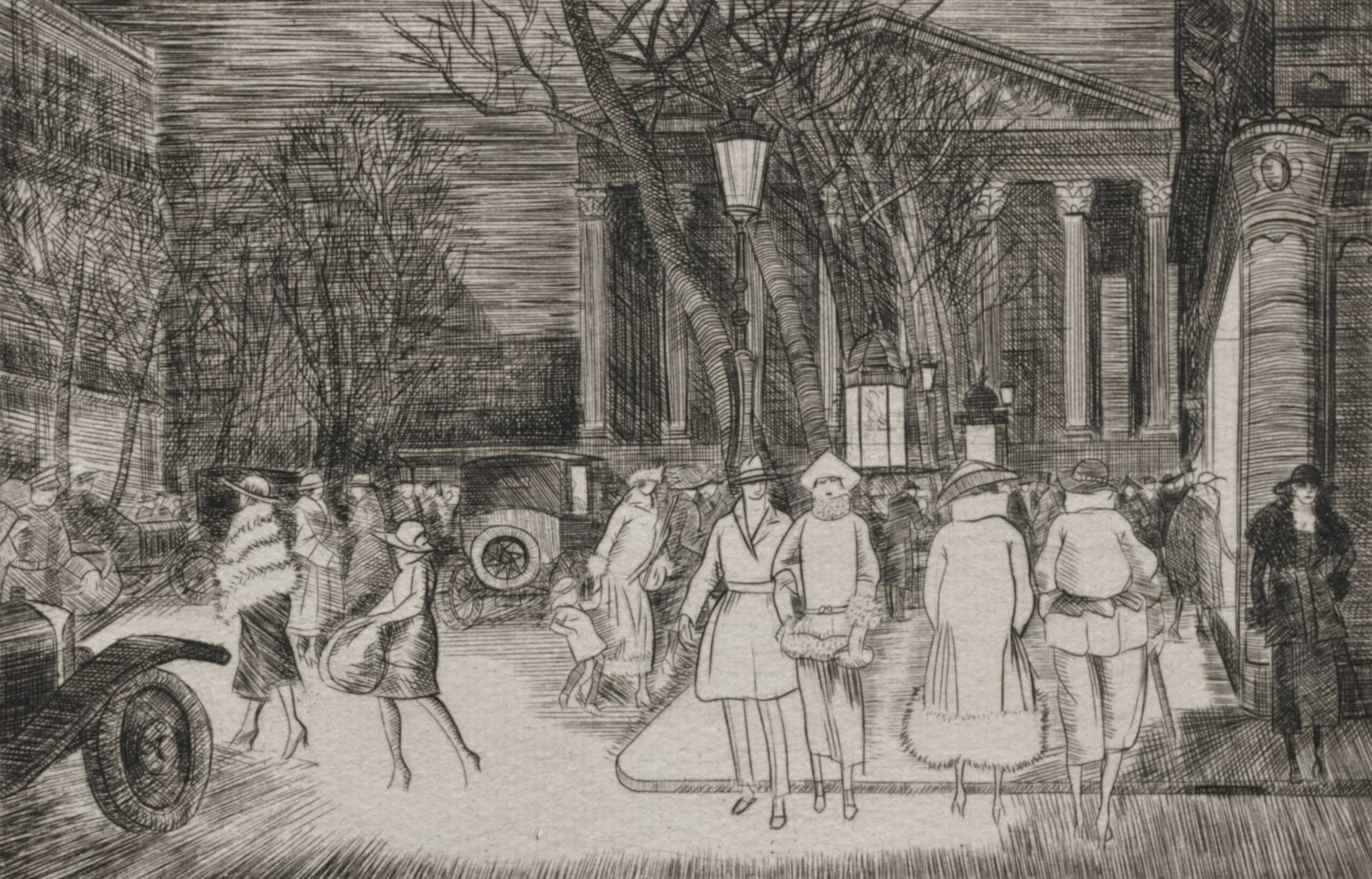
So in November, as a late birthday and early Christmas treat to myself, I was in Paris learning about Parisian fashion history. I walked Rue Saint-Honoré, Place Vendôme, Rue de la Paix, and the surrounding streets where fashion houses were founded, rivalries unfolded, and power still quietly sits.
Sure, I’m a Project Runway fan and used to sew clothes for my Barbies, but beyond fandom and surface-level learning, this was proximity. And proximity beats permission, or waiting for an opportunity to arrive, every time.
So is this blog post useful for your weekly trivia game? Sure, if you love knowing all the things like I do, you will enjoy the fashion facts, too. But it’s more about what fashion history reveals about how fashion events and Fashion Week operate at the heart, how iconic events are built and what this means if you want to work in a high level, high context, legacy driven environment today.
Iconic Immersion: Why Waiting to Be Hired Slows You Down
There’s a belief I no longer agree with, even though I used to have it, and it’s the belief that if you want to work at a certain event, agency, or sector, the first step is getting hired.
In reality, the people who shape industries don’t wait for permission (they are called, after all, trail blazers). They build fluency first. They understand the system, the history, the power dynamics, and the unspoken rules before they ever step into the room professionally. They create the opportunity themselves. Maybe part of it is manifestation.
Fashion is a very high context environment, a comparison I make after living in Asia for nearly ten years. It’s a sector of events and an industry, sure, but it’s also a culture in itself, a sector that relies on shared understanding, relationships, trust, and nonverbal cues. It’s shaped by memory, hierarchy, legacy, and symbolism. The event professional who succeeds in event logistics, production, or operations may still feel out of sync if they don’t understand what sits between the lines. I’ve seen this not just in fashion, but in global sport events and VIP environments, too. You can be the most skilled or smartest in the room, but the worst at your job.
So how do you understand how a world was built before trying to work inside it (and sometimes realizing whether you event want to be there at all)? How do you speak a language? You immerse yourself. That’s where Iconic Immersion comes in.
But a few tips for iconic immersion. Learning the history, language, and references is not an automatic invite or access. Having skills is still incredibly important, and passion will never automatically override work at this level. Proximity can also start to be a romantic idea instead of strategic if nothing is done to create or pursue opportunities, and it can lead to stalled careers. Learning how the space works will prove valuable when the opportunities do come (and maybe you will even create them).
The goal is to know how to move once you are inside the room.
Seasonal Collections & Event Calendars: Why Iconic Events Don’t Move
One of the most obvious lessons in fashion is seasonality and groups: Spring/Summer, Autumn/Winter, Couture, Ready-to-Wear. But rather than these collections representing clothes, they represent anticipation, access, and control of time.
You don’t see coats in stores year-round for a reason. Same with swimsuits. Timing creates or diminishes desire. Just look at the leftover swimsuits on sale in the autumn which then can’t be worn for six months.
Fashion calendars and seasonal collections were designed to structure demand. They dictate when something can be seen, bought, talked about, and remembered. And once you understand that, Fashion Week starts to look very familiar.
It starts to resemble the Olympics, Grand Slams, festivals and major award seasons. These events have long lead times and incredibly specific windows. Dates don’t move because an individual wants flexibility. The system is bigger than the project. Fashion Week is bigger than any single brand’s show.
Even the most powerful fashion house doesn’t delay their show because something isn’t quite ready. The Fashion Week calendar is sacred.
This matters enormously for event professionals.
It changes how you plan, where you apply pressure, what’s actually negotiable and what never will be.
Iconic events don’t feel like milestones in a year for no reason. They sit inside systems that have been engineered over decades, sometimes centuries. When you understand that, timing becomes very predictable, and in a way, planning easier.
That awareness alone can completely change how effective and calm you are inside major event environments.
Charles Frederick Worth and the Birth of the Runway
Let’s talk history? Stay with me. There’s a high chance you’ve never heard of him, unless you ARE inside the fashion industry, but fashion events began in the mid-1800s with Charles Frederick Worth, the man widely credited with founding haute couture. But beyond that, he created the modern fashion system, too.
He was the first to:
- Sew labels into garments
- Present collections instead of custom only designs
- Use live models
- Stage early runway-style presentations
This was revolutionary. Before Worth, dressmakers responded to client demands. They weren’t presenting collections and instead were made to order. Worth reversed that dynamic by showing garments on live models (his savvy businesswoman wife famously being one of them), essentially inventing the runway show. Thank you, Mr. Worth for the opportunity given to all people involved in a runway show over time. Naturally, they weren’t called runway shows at the time, but they were the first time fashion was staged as a collective and controlled experience, creating demand for the clothes rather than answering to them.
This shift matters far beyond fashion because it marked the moment when presentation and spectacle (for its time), became part of the product. Events, rather than being functional, were moments of influence.
For event professionals, this is a reminder that iconic events are never just about delivery. They are signals of taste, power, relevance and leadership, so if you are only thinking in terms of logistics, you miss the bigger game being played (and perhaps the more interesting game).
Cross-Pollination: Russian Influence and Why Events Don’t Stay in One Lane
One of the most fascinating periods in Parisian fashion history, in my opinion, is the late 19th/early 20th century when Paris was absorbing and transforming ideas from elsewhere.
Had you asked me about Russian influence in some of the most popular silhouettes and designs known by the general public a year ago, I wouldn’t have been able to tell you anything about the Russian influence on Parisian fashion. Shame on me. Indeed, Russian émigrés, artists, and designers played a huge role in fashion as we know it. For example, Sergei Diaghilev and the Ballets Russes brought theatricality, colour, embroidery, movement, and a new interpretation of costume and performance into Paris, not just sitting on the fringes for a small minority of people who liked the styles. It reshaped the industry at the time.
Coco Chanel, perhaps the most famous designer known to the layman, was directly connected to this world, and she dated Grand Duke Dmitri Pavlovich of Russia, one of the men involved in the murder of Rasputin, exposing her to to Russian aesthetics, craftsmanship, and cultural influence. Fashion evolved through proximity instead of isolation.
The fact that Paris neither copied nor ignored these ideas (rather, absorbed and refined them), is a pattern showing how iconic events evolve.
Iconic events don’t stay in one lane either:
- Sport borrows from entertainment
- Fashion borrows from music
- Ceremonies borrow from theatre
- Brand experiences borrow from architecture, music, and performance
This is why event professionals who only try to understand one sector often struggle when they move into another. It’s rarely a skills issue and more likely translation and context issues.
If you understand how ideas travel between worlds and how they’re adapted and not just copied, you become far more valuable and stop being “just” a fashion events person, or “just” a corporate events person, and start becoming someone who can move fluently between event environments.
That ability to translate is one of the most underrated career advantages in major events.
What Chanel, Vuitton & Hermès Reveal About Iconic Worlds
When people talk about legacy brands, they often reduce them to logos, aesthetics, or something that lives on a vision board, perhaps being the first “big” purchase once they can buy from the luxury market. They probably don’t know or necessarily are about the legacies and histories behind these brands, but to people these brands represent money… “Ive made it, and I want people to know.”
But the things I learned about Chanel, Louis Vuitton, and Hermès show something quite useful for event professionals, and that is legacy isn’t about looking good over time. It’s about how small decisions later become mythology. And that will make sense in a moment.
Concept Blending Builds Power
Coco Chanel’s story is often flattened into pearls and black dresses and the timeless designs, but her real influence came from concept blending.
Coco grew up in poverty, spent time in an orphanage, and learned sewing from nuns. Perhaps this is why her designs always featured clean lines and elegance. Her creative evolution, though, was deeply influenced by her relationships. Her affair with Grand Duke Dmitri Pavlovich of Russia exposed her to Russian aesthetics at a moment when Paris was absorbing outside influence due to the high number of émigrés fleeing after the Bolshevik Revolution.
Chanel also fell in love with British tweed, a fabric originally designed for men’s countryside clothing. She took something very much British (and still British) and made it synonymous with the Parisian woman. British material meets French designer to create an iconic outcome.
This matters for events. Iconic worlds aren’t untouched. They are a hybrid of ideas from adjacent fields, cultures, disciplines, and geographies. They absorb and elevate those ideas.
Event professionals who cling to “how it’s always been done” can miss this entirely, but the people who get to the top in their respective event fields are the ones who understand how influence travels and can translate it.
Personal History Becomes Myth
Some of Chanel’s most iconic creations were deeply personal. The Little Black Dress wasn’t originally designed as a dress to wear on a date or a cocktail night with the gals. The story is that it was a grief response when her love, Boy Capel, died, and Chanel wanted to mourn without blasting it to the world. So what do you do when you want to mourn in secret? Create a black dress that was so chic no one interpreted it as somber. While the truth was loss, the people saw style.
Then there is the story of Chanel No. 5, when Chanel was presented with several perfume samples and chose the fifth. She named it No. 5. That was it. A small, very casual decision became one of the most powerful items in fashion history.
Iconic event environments do this constantly. Small decisions, whether it’s a name, a colour, a ritual, a rule, get repeated, remembered, and mythologised. Over time, they become “tradition.” This is where I tell you to look up why the players wear white at Wimbledon.
Details matter in major events. It’s why players wear white in SW19 and why some things can’t be changed even when no one remembers why.
Iconic environments edit history instead of erasing it, and if you understand how storytelling and symbolism work, you can navigate politics and reputation effectively when you work inside of them.
Function Comes First & Legacy Follows
Louis Vuitton didn’t start as a luxury brand. He started as a trunk maker. I did not know this, but I quickly learned it when standing outside the site of his first workshop. Before Louis, trunks had rounded tops and couldn’t be stacked, so he redesigned them with flat tops, waterproof materials, and really well organised interiors at a time when people were increasingly using trains to travel. The functional item came before his iconic designs.
Why is the Louis Vuitton on every item to this day? Louis came from nothing (he famously hitchhiked to Paris over the course of two years as a 13 year old). He wanted his name visible and rightfully so.
Next is Hermès, a brand founded in 1837 as a harness and saddle workshop. Look at their logo, and you still see a horse. Today, the Hermès family retains around 51% ownership, and it is evident that control is more important than growth.
This is an important idea for event professionals because not every iconic event wants scale. Some want protection whilst others want growth.
If you approach a couture-level event with only a “growth mindset” and forget the legacy behind it, you will quickly feel friction. This isn’t to say that modern iconic events don’t implement modern values (sustainability being one), but the most trusted professionals are the ones who understand their role is to innovate whilst also protect.
What This Means for Event Careers Today
Chanel, Vuitton, and Hermès all prove that iconic worlds are built on memory and symbolism. For event professionals in major iconic events this means:
- Understanding where ideas come from and how they’re allowed to evolve
- Respecting history without being trapped by it
- Knowing when details are just information and when they are sacred
This is the kind of fluency you don’t really get from job descriptions or Instagram posts. But you can get it through iconic immersion, by studying how worlds you want to work inside were built and how they operate in a modern world.
Place Vendôme, Rue Royale & Geography as Status
When jewelers like Boucheron, Cartier, and Van Cleef & Arpels clustered in Place Vendôme, that proximity became the signal that they had “made it”. If you have a shop in Place Vendôme, you are around royalty, aristocracy, old money, and global wealth, both as a shop owner and a buyer.
Frédéric Boucheron, known for iconic asymmetrical jewellery designs, opened his boutique by his former master. Perhaps better suited for going around the corner or even another arrondissement, the apprentice set up shop right next door. It declared legitimacy.
Rue Royale, Rue de la Paix, and Rue Saint-Honoré are also a declaration of legitimacy. Have an address here, and you’ve passed a threshold and want others to know it, even if not many people walk through the doors of this particular location.
In fashion, location communicates success, just like some fashion show cities are suited for up-and-coming designers and others for established names.
Geography can be a sort of contract that stands the test of time. Moving an atelier or re-locating an event doesn’t mean the original location isn’t of relevance (hence why people still take tours). And even in 2026, a flagship on Rue Saint-Honoré isn’t there because it’s the only or best place to sell luxury goods, but history has trained us to read it as important.
So, places become important. Iconic events don’t roam freely like more accessible events do, going to places where a tourism board has wowed them. They return to the same cities, venues, and neighbourhoods again and again because place becomes part of the brand and legacy, like:
- Cannes and the Croisette
- Wimbledon and SW19
- The Met Gala and Fifth Avenue
The event locations become bigger than the staging. If the event moves, it risks diminishing the meaning. This is why iconic events don’t just shift locations, even when logistics suggest they could. Location has just as much memory and legitimacy as the event, and that can’t be rebuilt overnight.
For event professionals, this changes how you approach opportunities. You’re not just producing a show, a ceremony, or a tournament. You’re entering part of a story. And this reminds us why proximity matters:
- Being present in the right cities
- Understanding why certain venues are untouchable
- Knowing which neighbourhoods have the decision makers, suppliers, and talent
So remember, place is not just the backdrop of iconic events.
Couture vs Ready-to-Wear: Why Some Events Feel Untouchable
Couture exists to set standards. It’s rare, symbolic, protected, and slow. Ready-to-wear exists to scale. It’s functional, repeatable, commercial. Fashion Week holds both and so does the event industry.
Iconic events operate like couture, some with invitations required, high prices, huge travel costs, even lotteries before you can even consider buying tickets. Most events, though, operate like ready-to-wear. They are accessible, higher volume, and open to the masses to host or attend. Try to apply the wrong logic to the wrong environment, and problems will arise.
If you ever find yourself frustrated in major events, it may be because you’re trying to introduce efficiency where symbolism matters more (or expecting couture level care in a ready-to-wear setting).
Knowing which world you’re in changes how visible you should be, how decisions get made, and what success actually looks like.
Coco Chanel, Elsa Schiaparelli & the Long Memory of Iconic Worlds
The rivalry between Coco Chanel and Elsa Schiaparelli reveals something most people don’t realise about events and iconic brands: they have long memories.
Fashion houses have reputations, alliances, grudges, and unspoken histories that linger longer than any single collection or designer.
Chanel and Schiaparelli represented two very different philosophies. Most people know Chanel’s aesthetic and philosophy. Schiaparelli embraced surrealism and theatricality, collaborating with artists like Salvador Dalí.
Their rivalry was interesting. Chanel refused to acknowledge Schiaparelli publicly, even as they competed for the same elite clientele. It was quiet.
Iconic events work exactly the same way. Their rivalry shows that often the most important information is quiet, and you won’t find it in the operations manual or run of show. People and memories pass down information. Phrases like:
- “They’ll know.”
- “That’s how it’s always been.”
- “We don’t do that here.”
If you’ve ever felt like something was missing, like a rule you were expected to know but couldn’t find anywhere, it’s because it isn’t written down. It’s remembered. Like the rivalry between Chanel and Schiaparelli
Just like fashion houses, iconic events pass knowledge like who knows what, who does what, who speaks to whom, who is and isn’t invited back. The same has happened to me at iconic events. Maybe it could be called gossip, but it’s information decades old. Personally, I’ve known information like this, and it has given me an edge in the events the following year and in entire sectors, too.
For event professionals, it matters to know the memory. Logically, iconic events are merit based systems because of their scale and complexity, but part of that merit is seeing the invisible layer and not just memorizing everything.
What Iconic Immersion Looks Like in Practice
In practice, Iconic Immersion is quiet.
It looks like choosing when and where to travel, not for Instagram aesthetics (although sometimes you get both), but for context. It’s being in cities while their iconic events are actually happening, when the ecosystem is live, teams are assembled, and the pace of decision making is visible. You’re not there as a fan, and you’re not there to force access. You’re there to observe how the world moves when it’s under pressure.
It means listening more than approaching. Noticing which hotels quietly fill with production teams, which cafes become informal meeting points, and how the city’s rhythm shifts during key weeks. It’s sitting down for a coffee with people in that world, paying attention to which details are treated as flexible and which are protected without discussion.
None of this requires a job title or a credential badge, but it changes how you show up when you eventually have one. Studying fashion history hasn’t made me want to design clothes, but it has made me better at reading rooms. I know how to have conversations inside certain sectors. I understand what can’t be touched (even when it’s frustrating), and where influence can actually be applied.
Iconic Immersion can happen before you’re hired, and sometimes it’s what allows you to create the opportunity yourself. You don’t know who will be in the city at the same time you are, or what context you’ll be able to reference when a conversation opens. Proximity doesn’t guarantee access, but it improves relevance.
More than surface level research or fandom, Iconic Immersion is about learning how a world was built, how it protects itself, and deciding how and whether you want to move inside it.
If major events are on your list this year, this way of thinking will change how you position yourself.
When I go to Paris now, I’m remembering more than the facts. I see those streets differently. I understand why they matter.
I am even learning French so I don’t sound so silly when I DO talk about these places, brands and names in conversations. Maybe it’s a little manifestation.
Iconic events are big and broad, yes, but they’re also very deep, and understanding that depth is part of the job.
So, What Now?
Come on over to Instagram @lauralloydevents and message me or DM me on LinkedIn at Laura Yarbrough-Lloyd and tell me what you’re up to in the world of events.
Check out this podcast episode on my podcast, A Flair for VIP Events. I dive into this topic even more!
Laura Yarbrough-Lloyd is an event freelancer and career strategist for event professionals. As the founder of IconicEvents®, she is an industry voice on event careers, talent development, and the future of the events workforce. She works with event professionals and organizations across sectors to help build sustainable, ambitious careers within the world’s most iconic events. Her writing explores career progression, industry structures, and the realities of long-term success in events.
